



Share This Article
Electronic music has always thrived on blurred boundaries. The most memorable records rarely belong entirely to one genre, instead existing in the productive tension between different traditions. Blondex’s debut EP, Twisted Reality, embraces exactly this philosophy. Released on Amelie Lens’ EXHALE imprint, the four-track collection demonstrates an artist less interested in satisfying stylistic expectations than in constructing an immersive sonic universe where trance emotion and techno discipline continuously reshape one another.
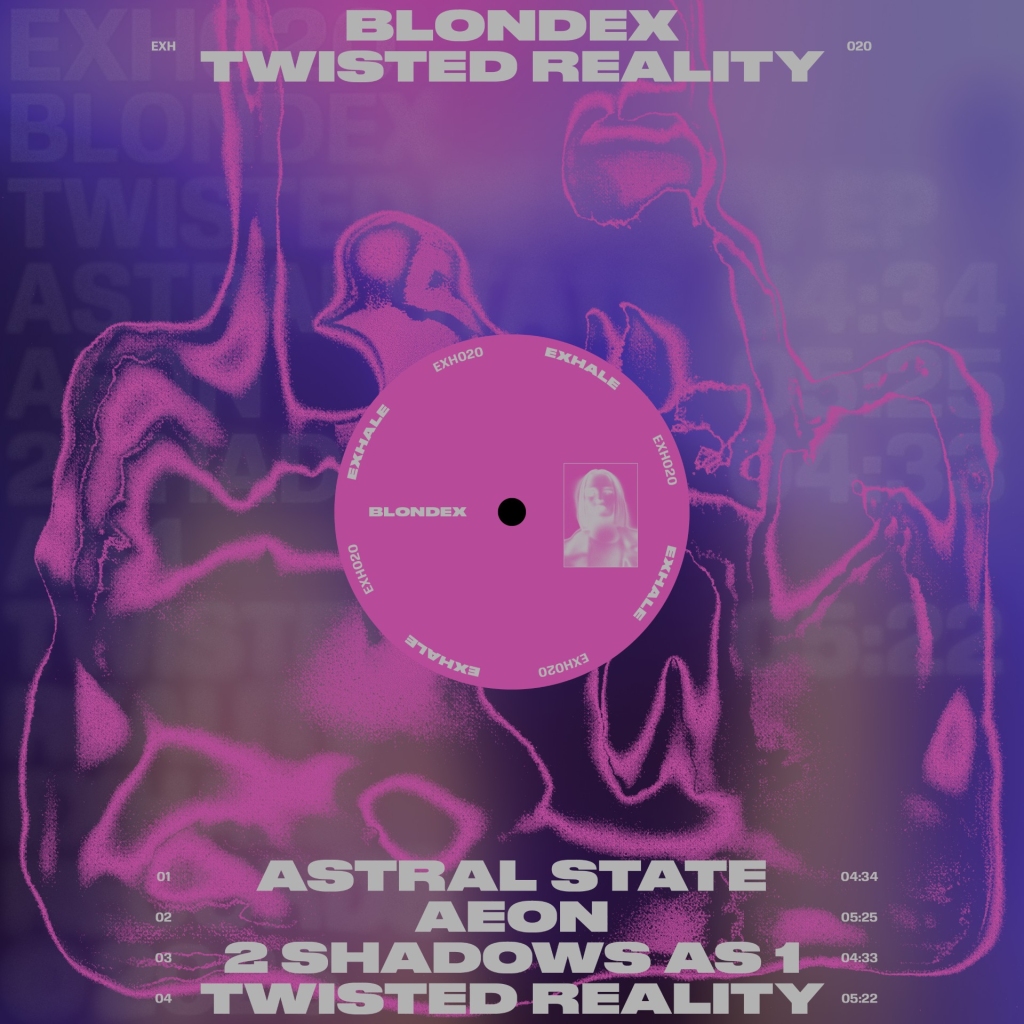
Blondex has already built a reputation for emotionally charged productions and commanding DJ performances, but Twisted Reality feels like the moment where those individual characteristics crystallize into a coherent artistic identity. Across four interconnected compositions, she explores perception, memory and altered consciousness with remarkable consistency.
The opening track, “Astral State,” immediately communicates the EP’s ambitions. Rather than relying on instant gratification, the arrangement unfolds patiently, layering monumental percussion beneath luminous melodic structures that seem suspended in constant motion. Its driving energy never feels aggressive for the sake of impact; instead, momentum is generated through subtle shifts in texture and carefully measured harmonic development. The result is peak-time techno that remains emotionally articulate.
If the opener introduces the dreamlike dimension of the record, “Aeon” expands it dramatically. Acid motifs weave through atmospheric pads while soaring synth leads evoke the emotional architecture of classic European trance without ever sounding nostalgic. Blondex avoids obvious references, choosing instead to reinterpret those influences through a contemporary production language defined by clarity, weight and restraint. It is perhaps the EP’s most elegant balancing act.
The record becomes increasingly introspective with “2 Shadows As 1.” Here, shimmering pads and restrained vocal phrases introduce a welcome vulnerability into the otherwise forceful rhythmic framework. Rather than functioning as traditional vocals, the human voice becomes another textural element, floating between foreground and background while reinforcing the EP’s recurring theme of fractured perception.
Closing composition “Twisted Reality” delivers the project’s emotional climax. Thick analogue basslines, distorted synth passages and cavernous atmospheres combine into an expansive finale that dissolves conventional dancefloor expectations. Instead of ending with maximal impact, Blondex opts for psychological intensity, leaving listeners suspended between euphoria and uncertainty.
One of the EP’s greatest strengths lies in its pacing. Every track naturally leads into the next, making the release feel less like four separate productions and more like a continuous narrative arc. That structural coherence reflects a maturity often absent from debut records, where producers frequently prioritize showcasing versatility over establishing identity.
Production quality throughout remains exceptional. The low-end is powerful without overwhelming the mix, melodic layers retain remarkable definition, and every transition feels purposeful. Blondex demonstrates a sophisticated understanding of space, allowing individual sounds to breathe while maintaining relentless forward momentum.
Within EXHALE’s evolving catalogue, Twisted Reality comfortably sits alongside releases that challenge conventional definitions of modern techno. Yet Blondex never disappears beneath the label’s established aesthetic. Instead, she contributes her own vocabulary—one rooted equally in hypnotic repetition, melodic storytelling and cinematic atmosphere.
Ultimately, Twisted Reality is less concerned with revisiting the past than with imagining where trance-inflected techno can evolve next. It is an ambitious, emotionally resonant debut that introduces Blondex as an artist capable of translating introspection into movement, proving that contemporary club music can still surprise when narrative becomes as important as functionality.
