


Share This Article
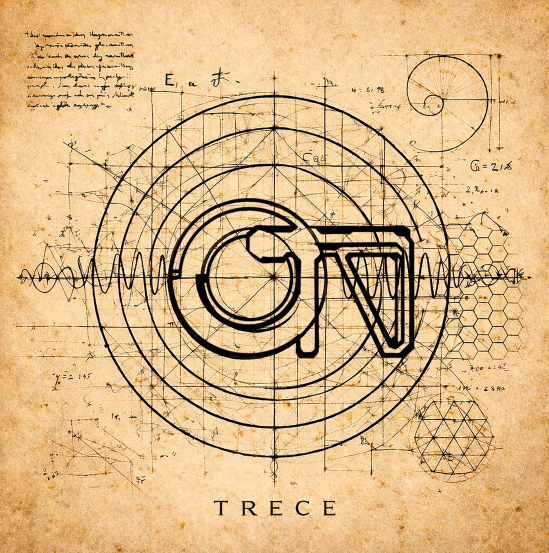
Working against the pressure of constant output and high-speed consumption, UMO approaches “Trece” as a study in control rather than excess. The EP navigates a space where lower tempos don’t reduce intensity, but reshape it — focusing on tension, structure and physical impact on the dancefloor. Rooted in reduction and live-tested dynamics, the project reflects a precise and intentional way of building energy. In this interview, UMO breaks down the ideas behind “Trece” and how its framework rethinks both rave legacy and club functionality.
Your work on “Trece” focuses on slow evolution and space as structural tools. How do you approach space as an active element in composition?
Space is not absence, it’s part of the structure.
It defines how elements relate and how tension can shift over time. Instead of filling everything, space allows transitions to happen with more clarity and gives weight to each movement in the track.
Without space, there’s no control.
The EP creates a kind of progressive synchronization on the dancefloor. At what point did you become aware of this effect?
Through playing the tracks over time.
You start to notice how the room reacts when the structure moves — through transitions, breaks and changes in direction. At some point the crowd aligns, even as the track evolves.
That’s when you understand how to navigate it.
You mention that this is not about nostalgia but reconfiguration. What differentiates reconstruction from revival in your process?
Revival focuses on recreating a sound.
Reconstruction works on how that sound behaves. The early rave energy is still there, but it’s reorganised — different pacing, different structure, more contrast between sections.
It’s not about staying in one place, but moving through it.
The idea of “each element enters, leaves a trace, and disappears” suggests a very deliberate sequencing. How do you build that flow?
By thinking in terms of movement rather than loops.
Each track evolves through shifts — breaks, changes in rhythm, new elements entering and others leaving. The structure is not linear, it moves between different states.
The flow comes from how those transitions are connected.
OpenTheNext emphasizes discovery over consumption. Do you think this changes how listeners engage with your music?
Yes, it changes how deep they go.
If people arrive by themselves, they tend to explore more — not just one track, but the whole catalogue. That creates a different kind of relationship with the music.
Less immediate, but more engaged.
The tracks are designed for long-form sets and non-explosive movement. How does this influence the rhythmic and dynamic choices you make?
It allows more freedom in structure.
Instead of following a fixed pattern, I can move between different energies — breaks, heavier bass sections, more atmospheric parts — without needing to resolve everything quickly.
The dynamic comes from contrast, not from repetition.
“Tested in real conditions, not studio assumptions” is a key idea here. What did the dancefloor teach you that the studio couldn’t?
How people react to change.
In the studio, you can imagine transitions. On the dancefloor, you see exactly how they land — when a break holds attention, when a shift in energy works, when something feels too predictable.
It pushes you to keep the structure active and avoid linearity.
Below you’ll find a few free download codes for the release.
Redeem them at:
https://openthenext.bandcamp.com/yum
Each code is valid for one use.
lv5v-y9f3
q988-79v4
f2n2-5zza
wxa5-7tk7
ee9g-v7zv
br2n-g599
allm-uugz
8ep6-vqf6
6vk8-h4jv
ufyt-5at8
vauy-723n
965y-vhlj
n37z-6e5y
ma5n-kubr
g96v-kq4l
Link:
👉 https://openthenext.bandcamp.com/yum
