


Share This Article
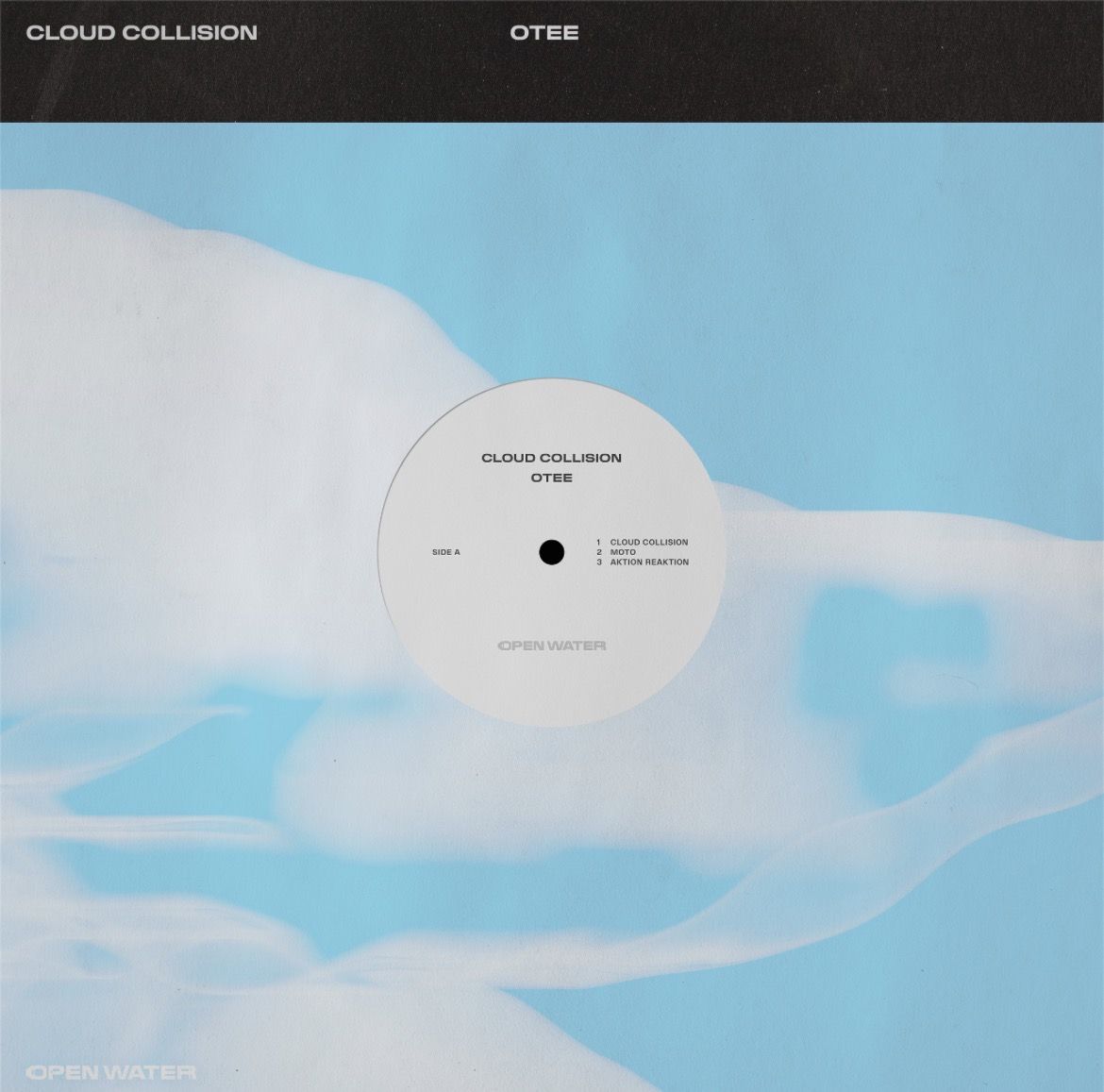
There is a particular discipline to club music that understands when not to push too hard. On Cloud Collision, OTEE makes that restraint the foundation of his sound, delivering a five-track EP that favours patient development, loop-driven structures and the physical qualities of rhythm over the kind of immediate gratification that often defines contemporary dance music.
The record marks the debut of Open Water, the label founded by the Berlin-based DJ and producer. Its identity is established through a coherent collection of tracks that approach the dancefloor as a space for gradual immersion. OTEE’s background in the city’s clubs and studios informs the production, but Cloud Collision is not simply a document of established influences. It is an exercise in understanding how small changes in texture, timing and arrangement can sustain momentum.
The title track sets the tone with a measured approach to energy. Its emphasis on rhythm creates a solid framework for the atmospheric details to unfold around it. Instead of treating percussion as a vehicle for a predictable crescendo, OTEE uses repetition as a compositional tool, allowing the track to establish its own internal logic. The effect is subtle but purposeful, giving DJs material that can work within a longer narrative rather than demanding to become its focal point.
“Moto” follows with another exploration of groove and forward motion. The production maintains a sense of economy, suggesting that OTEE is comfortable allowing a limited number of elements to carry the arrangement. That economy becomes one of the EP’s defining characteristics: each track develops through the relationship between its constituent parts, rather than through an accumulation of increasingly dramatic gestures.
“Aktion Reaktion” brings the record’s central idea into sharper focus. Its title implies a system of exchanges, and the music can be understood in similar terms, with rhythmic elements establishing a dialogue that evolves through repetition. OTEE’s approach is rooted in functionality, but the tracks avoid feeling anonymous. Their appeal lies in the attention paid to pacing and the subtle variations that keep a loop alive.
On the B-side, “Retrograde” offers a change in perspective without disrupting the EP’s overall continuity. Its title hints at reversal and reconsideration, fitting a track that sits comfortably within the release’s measured aesthetic. The closing “Parabola” completes the sequence by reinforcing its interest in movement and gradual transformation. Together, the final two tracks provide a sense of resolution without resorting to an overly emphatic conclusion.
What makes Cloud Collision effective is its consistency of purpose. Across five tracks, OTEE returns to the same fundamental concerns—drum programming, repetition, atmosphere and the management of energy—but approaches them from slightly different angles. This gives the EP a unified identity while leaving enough variation for the individual pieces to function independently in a DJ set.
As an introduction to Open Water, the release establishes a clear set of priorities. It is music built for the deeper end of the floor, where the relationship between the DJ, the room and the rhythm matters more than a single spectacular moment. Cloud Collision does not attempt to reinvent the language of electronic music. Instead, it demonstrates how effective that language can remain when handled with patience, precision and a strong sense of purpose.
