


Share This Article
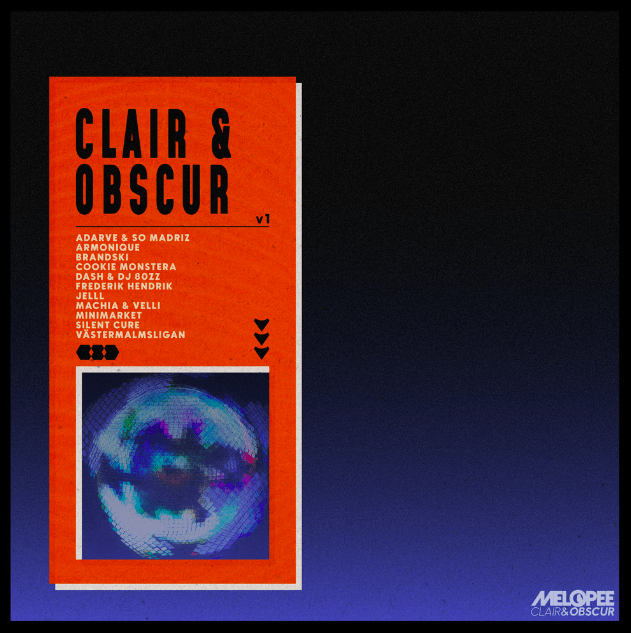
There is something refreshing about a label introducing itself through a compilation rather than a succession of singles. CLAIR et OBSCUR, the first original various artists release from Mélopée Records, feels less like a showcase and more like an aesthetic manifesto, one that confidently maps out the emotional and sonic coordinates the imprint intends to inhabit. By bringing together ten artists—most of them making their debut on the label—the collection embraces discovery without sacrificing coherence, allowing individual voices to contribute to a broader narrative.
The concept is elegantly simple yet surprisingly effective. Inspired by the owl that serves as the label’s emblem, the compilation unfolds as a dialogue between light and darkness, movement and contemplation. Rather than relying on genre clichés, Mélopée Records treats these opposing forces as complementary emotional states, inviting listeners to experience electronic music as a continuum rather than a binary.
The first chapter, CLAIR, radiates openness. These productions carry an undeniable sense of forward motion, balancing rhythmic vitality with melodic sophistication. Warm harmonies, luminous synth work and carefully sculpted grooves create tracks that feel equally suited to intimate dancefloors and solitary headphone sessions. There is a celebratory spirit throughout, yet it never slips into superficial euphoria. Every arrangement displays a measured attention to detail that elevates the material beyond functional club music.
As the compilation progresses into OBSCUR, the atmosphere gradually contracts. The percussion becomes weightier, harmonic palettes grow more ambiguous, and textures acquire a tactile roughness that rewards close listening. Instead of chasing maximal intensity, these tracks cultivate tension through restraint. Space, silence and subtle modulation become compositional tools, producing moments of introspection that feel cinematic without becoming overly dramatic. The darker half of the record never abandons groove; rather, it transforms rhythm into a vehicle for psychological immersion.
What ultimately distinguishes CLAIR et OBSCUR is its curatorial confidence. Compilations often struggle to maintain identity across multiple contributors, but Mélopée Records achieves remarkable consistency without flattening individual expression. Each producer occupies a distinct place within the larger architecture, making the sequencing feel intentional rather than merely assembled.
As inaugural statements go, this is an impressive one. Instead of defining itself through rigid stylistic boundaries, Mélopée Records introduces an ethos built around contrast, nuance and emotional balance. CLAIR et OBSCUR succeeds not simply because its tracks are compelling in isolation, but because together they form a carefully considered journey that reveals a label already comfortable with complexity and unafraid to let ambiguity become one of its greatest strengths.
